


Tap image to shop




Standing Still Is Not an Option
There comes a point in every creative journey where comfort can become the most dangerous place to stay.
Not because comfort is wrong. We all work hard to reach some version of it. Stability, recognition, routine, respect. These are things we are taught to chase. But in a world moving as quickly as this one, especially with technology and AI shifting the ground beneath every industry, comfort can quietly turn into complacency if we are not careful.
This issue is about looking at the bigger picture.
With Shawn Hewson on our cover, we are reminded of what it means to build, evolve, take risks, and continue moving with intention. Shawn’s journey is not just about fashion, design, or business. It is about ownership. It is about understanding that being creative is one thing, but having the courage to shape your own lane, protect your ideas, and build something with your name on it is another.
For years, entrepreneurship was often seen as the brave path. The uncertain path. The road for people willing to bet on themselves when there was no guarantee the world would meet them halfway. But today, that conversation is changing. Ownership is no longer just about ambition. In many ways, it is becoming necessary.
The world is changing too fast to simply wait for permission. Technology is disrupting how we work, how we sell, how we create, how we communicate, and how we are discovered. AI is not coming. It is here. And while that can feel intimidating, it can also be a wake-up call. The creatives, designers, artists, builders, and entrepreneurs who learn to move with it, rather than fear it, will have a greater chance of shaping what comes next.
That does not mean everyone has to chase the same version of success. It does not mean everyone has to become a founder, launch a company, or carry the weight of an entire brand on their shoulders. But it does mean we all have to start thinking differently about ownership. Ownership of our ideas. Ownership of our stories. Ownership of our value. Ownership of the rooms we enter and the opportunities we create.
At BDC Magazine, that conversation has always been central to our purpose. We are not simply here to showcase talent. We are here to document the people building something real in real time. The ones taking the chance. The ones learning as they go. The ones who refuse to be boxed in by outdated systems or limited expectations.
This issue is a reminder that the future will belong to those who are willing to adapt, but also to those who are brave enough to claim space before it is handed to them.
Comfort may feel safe, but movement is where the growth is.
And in this new world, standing still may no longer be an option.
George Sully
Publisher / Editor-in-Chief, BDC Magazine
ON THE
COVER
Tailoring Legacy
SHAWN HEWSON


THE COLLABORATORY
From Backdrop to Collection:
Giving the BDC Magazine Step & Repeat
a Second Life
By Michael Boathaus

FASHION
BDC X MICHELINE WEDDERBURN
At most events, the step and repeat is one of the few things that quietly holds the room together. It is where guests gather, cameras flash, and the energy of the night is captured one frame at a time. It becomes the visual record of an event, the backdrop to the smiles, the outfits, the reunions, and the moments people want to remember.
For the launch of BDC Magazine, that step and repeat carried more than logos. It carried the energy of a milestone. Inside the Toronto Fashion Academy studio, it became a symbol of what the night represented: community, creativity, visibility, and the beginning of a new chapter for Black Designers of Canada.
But once the event ended, I kept thinking about the material itself. So much effort goes into these branded event pieces, only for them to be used once and then disappear. For a magazine and platform built around design, storytelling, and purpose, it felt right to ask a different question. What if the same material that framed the launch could be transformed into something new?
That idea led me to my good friend Micheline Wedderburn, better known as Meesh.


To bring the story full circle, we returned to the Toronto Fashion Academy studio, the same space where the BDC Magazine launch first unfolded. This time, Meesh arrived with her team of friends and models to shoot the finished collection. The studio that once held the event now held the next chapter.
That return mattered. It connected the beginning to the outcome. The step and repeat had started as part of an event experience, moved through the hands of an artist, and came back as a collection rooted in creativity, memory, sustainability, and community.
The BDC Step and Repeat Collection became more than a fashion project. It became a reminder of what can happen when design is allowed to live beyond its original purpose. It showed how an object tied to one night can become part of a larger conversation about resourcefulness, artistic trust, and giving meaningful materials a second life.
For BDC Magazine, this was a full-circle moment. For Meesh, it was another example of her ability to turn the overlooked into the unforgettable. And for me, it was a beautiful reminder that great design does not always begin with something new. Sometimes it begins by looking at what is already in front of us and asking what else it can become.

ESSENTIALS
LIST ÖFUURË
With Denim Daze II, Tehilah Abakasanga continues building a fashion world rooted in culture, womanhood, memory, and movement.
By Hayla Amini


There is a particular kind of woman Tehilah Abakasanga designs for. She does not wait for permission. She does not soften herself to be understood. She enters a room already knowing who she is, and somehow, the room seems to catch up.
That spirit has become central to ÖFUURË, the bold, expressive, Nigerian-born, Canada-based fashion brand founded by Abakasanga. But before ÖFUURË became a recognizable name with a global customer base, before the prints, the silhouettes, and the community that now surrounds it, there was a young designer already shaping clothes by hand in Nigeria under the name Tehilah Designs. By the time she arrived in Canada in 2012, fashion was not a passing interest. It was already a language she understood.
In early 2013, she launched Thriftee by Tehilah, reworking thrifted garments while learning how to translate her eye within a new country and context. ÖFUURË arrived in 2015, carrying a name that was deeply personal. In Ishan, ÖFUURË means “it is well,” a name given to her by her maternal grandmother. For Abakasanga, it became both a brand and a quiet declaration of faith.
The proof that ÖFUURË could become something larger did not arrive as one dramatic moment. It came through a pattern. Women returned. They bought again. They did not simply connect to the clothing, they connected to the feeling of being seen in it.

That feeling is not accidental. Abakasanga speaks about clothing with the understanding of someone raised in a culture where fashion is never just fashion. Growing up in Nigeria, she saw how clothing could shift posture, mood, and presence. A good outfit was not surface-level. It was confidence made visible.
Now, after more than a decade in Canada, her work carries both conviction and range. Nigeria gives ÖFUURË its boldness, its instinct, its deep understanding of how clothing can command attention. Canada gives the brand room to absorb different cultures, climates, women, and ways of moving through the world. The result is a design language made for women who contain multitudes and feel no pressure to choose only one part of themselves.
At the centre of that language is fit. Abakasanga is clear that wearability is not something to balance against culture or drama. It is the foundation. Clothes must move, sit properly, and make sense in a woman's real life. As a curvier woman herself, she understands what happens when fit is treated as an afterthought. At ÖFUURË, that is not an option.
That philosophy gives her boldest pieces their power. The print, the structure, the proportion, and the cultural references are not decorative additions. They are built into the bones of the garment. The clothing makes a statement, but it also lets a woman live in it.
That balance is especially clear in Denim Daze II, a collection that marks a fresh evolution for the brand. Denim, for Abakasanga, is not new territory. It was one of her earliest mediums during the Thriftee by Tehilah years. Interestingly, Denim Daze began as a linen collection, but fabric challenges led the team to test the silhouettes in denim. Once they did, the concept clicked.

Denim Daze I performed strongly, and the response from the ÖFUURË community made a second chapter feel inevitable. But Denim Daze II was not simply a repeat. Abakasanga wanted to push the fabric further, exploring new washes, weights, structures, and silhouettes while keeping the collection distinctly ÖFUURË.
That distinction comes through in the way denim is treated with the same seriousness as suiting or eveningwear. These are not casual pieces made only for ease. They are designed to feel finished, elevated, and intentional. There is corsetry, structure, volume, cinched waists, and the kind of proportion that nods to Nigerian fashion’s love of shape and presence.
One of the most personal details in the collection is the introduction of a new signature logo inspired by Abakasanga’s mother’s signature. Denim Daze II sits within the Omonigho line, making that maternal connection even more meaningful. It is a subtle reminder that legacy often lives in the details.
The collection also speaks to versatility. One pant can be worn four different ways, reflecting a customer who is creative, expressive, and unwilling to be limited by a single styling option.
For Abakasanga, community remains a powerful guide. She listens to her customers, studies the data, and understands that the women who found ÖFUURË years ago are evolving alongside the brand. She started the company at nineteen. Many of her customers have grown with her. Their lives have changed, and so have their wardrobes.
That long relationship is part of ÖFUURË’s strength. The brand has shipped to more than 100 countries, not because global reach was an afterthought, but because Abakasanga treated the global customer as the customer from the beginning.
Before a woman even puts on an ÖFUURË piece, Abakasanga hopes she feels the love in it. The thought, the care, the fabric, the cut, the smallest decisions. The brand’s tagline says it plainly: You Are the Moment.
The clothes do not create the moment.
She does.


"We believe that commitment to design is the power that drives creative solutions. Our designers are among the best in the world and you can see their influence in our products, our showrooms, our literature and our facilities."
Mike Keilhauer
CEO - KEILAUER
PRIME
CONVERSION
Why I Renovated My Brand New Build
By Connie Amartey


BENTLEY
POWER
REIMAGINED
12:08: Eight Past Twelve: An Ending
That Signals What’s Next
With Brandon Norris-Lue
There’s something poetic about the timing. Bentley closes the book on one of the most distinctive engines of the modern era and quietly ushers in a future that, while electrified, refuses to dilute the brand’s identity. A more powerful, aggressive, and efficient eight-cylinder engine now outpaces the 12-cylinder engines of the past.
The Hybrid Era Begins, Not with a Whisper, but with a Surge
If you expected a softened replacement for the outgoing W12, Bentley had other ideas. The new performance flagship, as seen in the Bentley Continental GT Speed, introduces a plug-in hybrid V8 that does not merely fill the gap. It redefines it altogether.
At its core is a familiar 4.0-litre twin-turbocharged V8, now paired with an electric motor and a substantial battery pack. The result is a combined output of 771 horsepower and 738 lb-ft of torque. These figures not only eclipse most previous Bentley powertrains, but also surpass the outgoing W12 at its peak.
More importantly, this is not performance at the expense of usability. With up to 50 kilometres of pure electric driving and a combined efficiency figure of 5.1 L/100 km-e, Bentley has engineered a drivetrain that feels as comfortable gliding silently through urban streets as it does devouring continents.
This hybrid V8 now underpins much of the lineup, from the Bentley Flying Spur to the highly anticipated next-generation Bentley Bentayga, signalling a brand-wide transformation rather than a one-off experiment.
The Final Chapter of the W12
The real story, however, lies in what has been left behind. In April 2024, at Bentley’s carbon-neutral Crewe facility, the final W12 engine was assembled, bringing an end to a 21-year production run that began with the original Bentley Continental GT.
Bentley’s 6.0-litre twin-turbocharged W12 was always an engineering curiosity. Its compact “W” configuration allowed for 12-cylinder performance in a package that did not compromise cabin space or refinement, an essential trait in the grand touring world.
Over two decades, more than 105,000 units were hand-built, powering everything from stately sedans to ultra-luxury SUVs. Its final and most potent expression arrived in the limited-run Bentley Batur, producing 739 horsepower and 738 lb-ft of torque. It was not just powerful. It was symbolic. A final crescendo.
Bentley’s decision to retire the W12 is not isolated. It aligns with the brand’s broader Beyond100 strategy and its commitment to a fully electric lineup by 2030. The message is clear: heritage matters, but the future demands reinvention.


WELL SUITED
The Confidence of a Custom Fit
By Taye Omari
In Nigeria, style is not an afterthought. It is a language, a signal, and, in many ways, a calling card. For Richard Adejumo, co-founder and Toronto Head Clothier of Fari Hara, that understanding began early. Growing up watching his father, a lawyer, leave the house in a suit every day, Adejumo learned that tailoring could represent more than clothing. It could represent success, authority, dignity, and presence.
That early impression became something more concrete in 2013, when Adejumo was part of a friend’s wedding party and experienced custom suiting firsthand. From selecting fabrics to choosing the details and seeing the final fit come together, the process left an impression. It was personal, intentional, and powerful. Soon after, he began offering that same experience to his own network. What started as a spark would eventually become Fari Hara.
At its core, Fari Hara is built on the idea of empowerment through clothing. The brand believes that when a man wears something made specifically for him, it changes how he moves through the world. He stands differently. He speaks differently. He enters rooms with a renewed sense of confidence. The suit may be the product, but the true result is transformation.
That philosophy is shared between Fari Hara’s two managing partners, Richard Adejumo and Hakeem Lawal. The pair came together through mutual friends who recognized how naturally their strengths complemented each other. Adejumo brought an existing client base, personal brand, and experience in custom suiting. Lawal brought operational strength, manufacturer relationships, vendor partnerships, and a sharp eye for structure and growth. With Adejumo in Toronto and Lawal in Calgary, what could have been a challenge became a strategic advantage. From the beginning, Fari Hara was positioned to grow across Canada.
In a fashion landscape often dominated by speed, sameness, and disposable trends, custom tailoring remains deeply relevant because it asks the wearer to slow down. Choosing a fabric, discussing fit, being measured, and returning for a fitting all require intention. It is the opposite of mass production. A custom garment is built around the person, not a mannequin. It moves with him, lasts with him, and reminds him that he is worth the care that went into making it.
For Adejumo and Lawal, fit is everything. A suit can be made from the finest fabric, but if it does not fit properly, it loses its power. When a garment fits as it should, the wearer stops adjusting and starts inhabiting it. Fabric communicates quality. Details such as buttons, linings, lapels, and stitching create individuality. As the brand puts it, it is not about classic fit or slim fit. It is about your fit.
The Fari Hara client is not defined by fashion alone. He may be an entrepreneur, a professional, a groom, or someone stepping into a major new chapter. What unites him is the desire to show up well. He comes for a suit, but often leaves with something more meaningful: the feeling that he belongs in the room.
Toronto has played a major role in shaping that identity. Since officially launching in June 2017 and debuting its first collection at African Fashion Week, Fari Hara has grown through culture, community, and word of mouth. Its garments have appeared on Breakfast Television, at TIFF, the Grammys, the JUNOs, the CAFA Awards, and on productions including Top Chef, Wall of Chefs, and The Big Bake.
Still, the most meaningful moments are often personal. A wedding. A major interview. A milestone event. One client even messaged after receiving a job offer to say the suit helped him walk into the interview with confidence.
Looking ahead, Adejumo and Lawal’s vision extends beyond two cities. The brand is building toward a stronger North American presence and developing an online offering that brings its custom experience to a wider market. But growth, for Fari Hara, will never come at the expense of the experience.
Because the experience is the brand. And at Fari Hara, the goal remains clear: to help every man own the style he already has.

DESIGN COOK EAT
The art of living better
By Kevin Pennant


IMAN STEWART
Designing the Dream: Inside EMerald at Roaring River's Phase One Model Suite
By Amara N
In Mammee Bay, St. Ann, Jamaica, a new residential vision is beginning to take shape. Emerald at Roaring River, a six-phase development by China Harbour, is being positioned as more than a place to live. It is a lifestyle destination rooted in beauty, comfort, and the unmistakable spirit of Jamaica.
For Phase One of the project, the design of the model suite was spearheaded by interior designer Iman Stewart, whose creative direction brings warmth, refinement, and a strong sense of place to the development’s first visual offering. A model suite is often the first emotional connection a buyer has with a property. It is where floor plans become real, where square footage becomes lifestyle, and where potential homeowners begin to imagine themselves inside the space. Stewart’s role was to shape that experience with intention.
The design approach for the Phase One model suite balances modern residential elegance with the natural ease of island living. Rather than creating a space that feels overly staged or disconnected from its surroundings, the suite is envisioned as polished, livable, and inviting. Every selection, from furniture and finishes to lighting, artwork, and styling, works together to tell a story of comfort and aspiration.
Located in Mammee Bay, one of Jamaica’s most desirable coastal communities, Emerald at Roaring River carries with it a sense of escape, beauty, and long-term potential. Stewart’s interior direction reflects that setting through a thoughtful blend of texture, tone, and atmosphere. The space is designed to feel elevated without losing its warmth, allowing prospective buyers to experience not only the architecture but the lifestyle attached to it.


PICTURE PERFECT
A Night to Remember, Captured Brilliantly by Teisha Gentles
By Malcolm Reid


WADE HUDSON
How Wade Hudson uses trust, light, and restraint to capture the person behind the image
By Lily Yange


LEX MILLINGTON
Lex Millington: Style in Motion
By George Sully | Photos by: Ocean Durham

For Lexson Millington, better known as Lex, fashion did not begin as a performance. It began quietly, during the stillness of the COVID-19 pandemic, as a personal outlet and a way to understand himself more clearly. In a time when the world felt uncertain, Lex turned inward, using clothing as a language to explore what he liked, how he wanted to show up, and what felt most honest.
At first, it was never about building a public platform. It was about documenting growth. But somewhere along the way, people began to connect with more than just the clothes. They connected with the intention behind them. That was the shift. Lex realized his work was resonating not simply because of style, but because it represented identity in motion.
His aesthetic is rooted in duality. Structured yet free. Nostalgic but present. Tailored and relaxed. Familiar yet unexpected. Drawing inspiration from 1970s western influences and Caribbean culture, Lex is not interested in replication. Instead, he translates those references through his own lens, creating looks that feel thoughtful, personal, and current. There is care in the way he dresses, but never stiffness. His style carries ease, confidence, and quiet precision.
Toronto has played a major role in shaping that perspective. For Lex, the city taught resilience. It is not a place that hands you identity; it forces you to define it for yourself. In a fashion landscape that does not shout as loudly as New York, London, or Paris, Toronto demands that creatives carve their own lanes. That environment helped Lex build confidence from within rather than waiting for outside validation.
“The city taught me how to stand out without asking for permission,” he reflects.
That sense of self-trust runs through his content. There is a visible joy and lightness in the way Lex presents himself, but it is not accidental. For him, joy is a choice, especially in uncertain seasons. Creating with faith, even before the outcome is clear, has become part of his mindset. That energy carries into his work and into the community he has built online.
Still, Lex is clear about what people often misunderstand about being a fashion content creator today. Behind the polished images and thoughtful styling is discipline, self-awareness, consistency, and the courage to evolve publicly. The audience sees the final look, but not always the internal work behind it. For Lex, sharing the process is part of the point. He is not presenting a finished version of himself. He is allowing people to witness the evolution.
That honesty has helped him build a meaningful online community. People are not just following outfits; they are following a journey. His relationship with vintage speaks to that same sense of story. Older garments, for Lex, carry intention. The fabric, construction, and details hold memory. A piece becomes special when it aligns not only with the body, but with the story he is trying to tell.

"The city taught me how to stand out without asking for permission"
That desire to create something tangible also led to Studio Homme, a multipurpose event and production space in the heart of Toronto’s Chinatown. Built with both elevation and community in mind, Studio Homme was created to be more than a studio people simply enter and leave. Lex wanted a space where creatives could connect, experiment, and bring ideas to life in a meaningful way.
Balancing creativity, business, and authenticity comes down to one word for him: alignment. Not every opportunity is the right one, and Lex is careful to build with longevity in mind. Creativity remains the foundation. Everything else must support that, not compete with it.
What Lex hopes people feel when they see his work is simple: that it is real. Built with intention, faith, and consistency over time. His message is not about having everything figured out before you begin. It is about trusting your perspective enough to start, and staying committed long enough for that perspective to become something meaningful.
In Lex’s world, style is not a costume. It is a record of becoming.

NOT YOUR PARENTS REAL ESTATE BROKERAGE
Veronica Harris: Luxury Real Estate with a Personal Touch
By BDC Team

One of the biggest advantages Veronica brings to her clients is access to a powerful local and global network. Through The Agency and Nexus Sports & Entertainment Relocation Network, she is connected to trusted professionals across North America and around the world, from movers and designers to schools, dentists, trainers, barbers, and industry specialists. Veronica does not just move clients into homes. She helps them integrate into communities.
Outside of real estate, Veronica is a sports enthusiast and loves being outdoors, whether on the beaches of Jamaica or hiking through Indian Wells. Her father is Jamaican, and her mother is Irish, and she is proud of both cultures and everything they represent. Representation, heritage, and community matter deeply to her, both personally and professionally.
At the end of the day, Veronica believes real estate should feel personal. Whether buying, selling, relocating, or investing, her approach is rooted in building something that lasts beyond the transaction, because this is more than a deal.

SAINT HARRIS
Saint Harris: Building Style From The Foundation Up
By George Sully
For Saint Harris, fashion began with inheritance, time, and discovery. The first pull came through clothes handed down from his father, pieces that carried more than fabric. They carried memory, character, and a quiet introduction to the power of personal presentation. Then came COVID, and with it, an abundance of time. In that stillness, Harris began to explore clothing not only as something to wear, but as something capable of telling a story.
What may have started as personal expression soon began to travel beyond him. When images of Harris started appearing on online fashion forums and blogs, and people began reacting to and connecting with them, he realized that what he was building had grown past himself. His style had entered a larger conversation. It was no longer simply about how he saw himself. It was about how others were beginning to see possibility through him.
Still, Harris does not define himself by one fixed personal style. In fact, he resists the idea altogether. Rather than placing himself inside one visual identity, he sees his strength in being able to create outfits within different style archetypes. This ability allows him to control and dictate the narrative his clothes tell. One look may speak to refinement, another to rebellion, another to nostalgia, restraint, confidence, or ease. The consistency is not in one uniform aesthetic, but in intention.


SHAWN
HEWSON
Tailoring Legacy, Law, and Canadian Production
By George Sully
Photography by Ocean Durham
There are certain fashion stories in Canada that are not just about clothes. They are about infrastructure, survival, humour, grit, and the people who quietly help build an industry from the inside out. Shawn Hewson’s story sits firmly in that space.
Long before Short Cuts became the next major chapter in his fashion journey, Hewson was already part of the Canadian menswear conversation through Bustle, the brand he co-founded with Ruth Promislow. But Bustle did not begin with a grand runway plan or a polished showroom strategy. It started much more modestly, and perhaps more honestly, as a side-hustle T-shirt line created by two full-time lawyers with a heat press, a point of view, and the kind of after-hours commitment that often separates ideas from actual businesses.
“When we first launched Bustle, Ruth and I were both full-time lawyers, and Bustle was a side-hustle T-shirt line,” Hewson recalls.
The early vision was focused: unique cut-and-sew T-shirts with strong fits, custom graphics, and a sense of design that felt different from what was available in Canadian menswear at the time. The pieces were hand-pressed on a Hotronix heat press, a machine they still have today. After long days practising law, Hewson and Promislow would return home to fill orders, sometimes from retailers like TNT, firing up the press at night and slowly building something that would become far bigger than a side project.
That gradual development became part of Bustle’s DNA. The brand followed a clear creative instinct: the clothes had to be directional, different, and never afraid of personality. In a menswear landscape that, at the time, was often more cautious than expressive, Bustle stood out by refusing to be quiet.

"In a way, I think our commitment to making menswear that stood out was our way of encouraging guys to express themselves with their wardrobe choices, and to
be bold and unapologetic about those choices"


“I’ll be honest, it felt a little strange to step into an ownership role at Short Cuts,” he says. “But it also feels right.”
After 25 years in and around the factory, Hewson knows the team, the workflow, and the importance of what Short Cuts represents. At a time when so much garment production has moved overseas, preserving local manufacturing in Canada is not simply sentimental. It is practical, strategic, and necessary.
Local production offers speed, consistency, reliability, smaller minimums, employment, and stronger environmental and social considerations. It also offers something harder to measure but deeply valuable: a safety net. Mistakes made locally can become lessons. Mistakes made overseas can become disasters.
For emerging designers especially, that difference can determine whether an idea survives.
Under Hewson’s leadership, Short Cuts is positioned to serve both established brands and the next generation of Canadian designers. The facility has the equipment, team, and infrastructure to support larger customers with fast turnaround times and high-quality production. But it is also equipped to guide newer designers who may need help with development, small runs, sampling, pattern drafting, fabric sourcing, and turning raw ideas into actual product.
That mentorship component feels full circle. Bustle was once the young, wet-behind-the-ears brand walking into Short Cuts with ideas, ambition, and plenty to learn. Now, as owners, Hewson and Promislow have the opportunity to nurture designers standing at that same beginning point.
The larger vision is clear. Short Cuts can be both a production facility and a pillar of Toronto’s fashion ecosystem. It can support established clients who know exactly what they need, while also helping emerging designers build properly from the ground up. It can contribute to the reshoring of Canadian manufacturing and challenge the flood of generic corporate merchandise being sourced and shipped from overseas.
For Hewson, the argument is simple: support the local economy and make a better product. Well-designed, locally made, customized, thoughtful goods are not only better for designers; they are better for the industry.
In many ways, this next chapter is not a departure from Bustle. It is an expansion of the same values that shaped the brand from the beginning: quality, originality, humour, problem-solving, and the belief that Canadian fashion deserves the infrastructure to stand on its own.
Shawn Hewson’s story is not just about a designer buying a factory. It is about a Canadian fashion veteran stepping deeper into the system that helped build him, and choosing to protect it for whoever comes next.
Oh Canada, indeed.

BRENDA DANSO
Designing for the Life Within: Brenda Danso on Interiors, Identity, and Emotional Well-Being
By George Sully


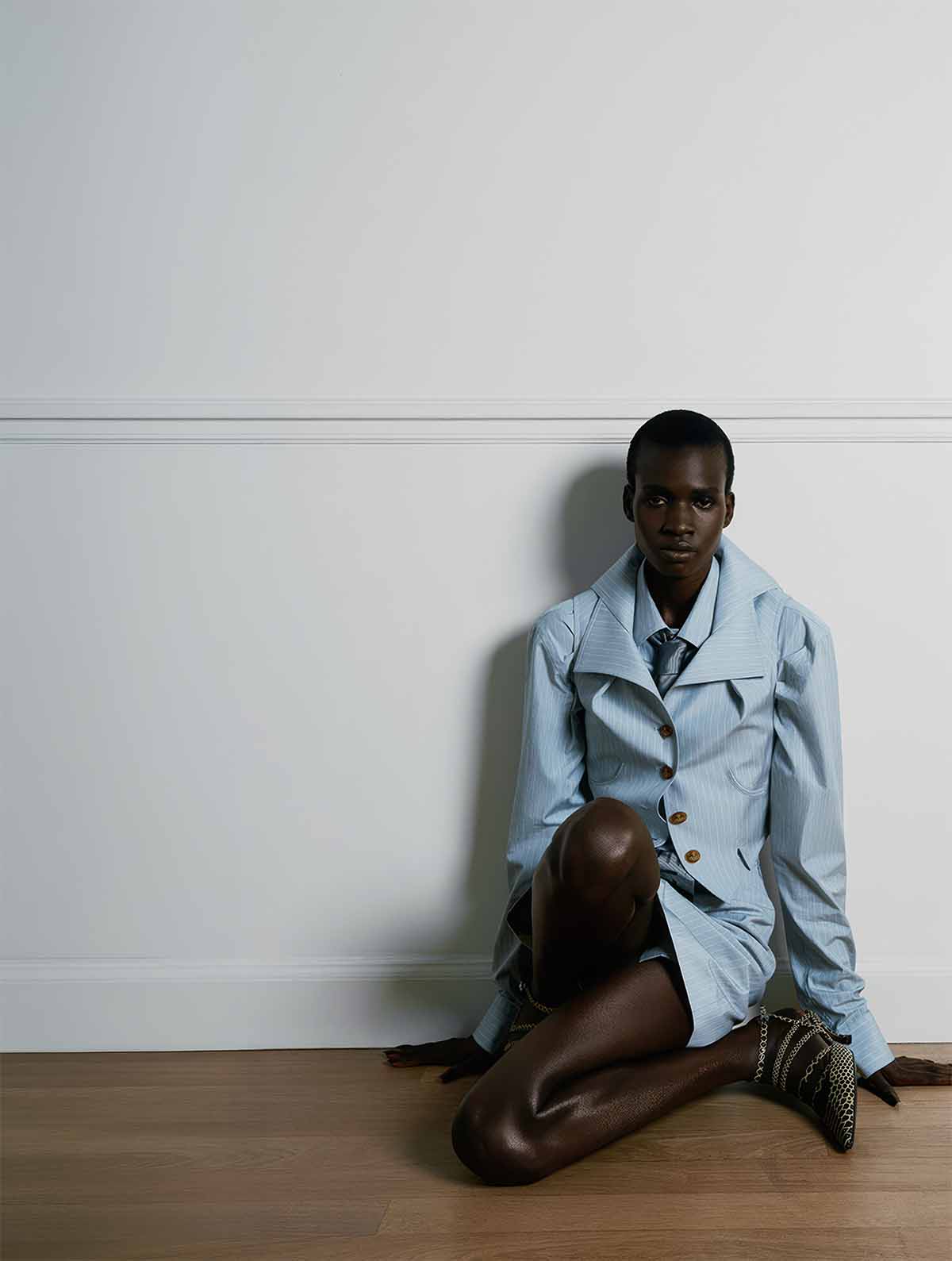
Tap image to shop
The Business of Movement
How Emburse Helped Vivienne Westwood Streamline Global Expense Management
By BDC Team
At Vivienne Westwood, movement is part of the brand’s DNA.
From international fashion shows and supplier visits to retail operations, executive travel, and the constant rhythm of a global fashion house, the business depends on people being in motion. But behind every trip, creative meeting, and cross-border operation sits an often unseen layer of administration: receipts, approvals, expense reports, finance coordination, and internal systems that need to keep pace.
For a house built on creativity, clarity matters. So does speed. As Vivienne Westwood continued to evolve across regions, the organization recognized the need for a more streamlined approach to expense management. The challenge was not simply replacing a system. It was about creating a process that could support the scale, pace, and complexity of a global brand while remaining intuitive for the people using it every day.
That responsibility sat in part with Paolo Zucca, Travel & Mobility Manager at Vivienne Westwood, whose role requires a constant balancing act between travel, operations, employees, internal teams, and the realities of a distributed organization.
In a business where travel is essential, what happens after the trip is just as important as the trip itself. Expenses need to be submitted. Approvals need to move. Reporting needs to be accurate. Finance teams need visibility. Employees need a process that does not slow them down.
For Vivienne Westwood, the need was clear: a global expense reporting solution that could bring consistency, simplicity, and coordination across the organization.
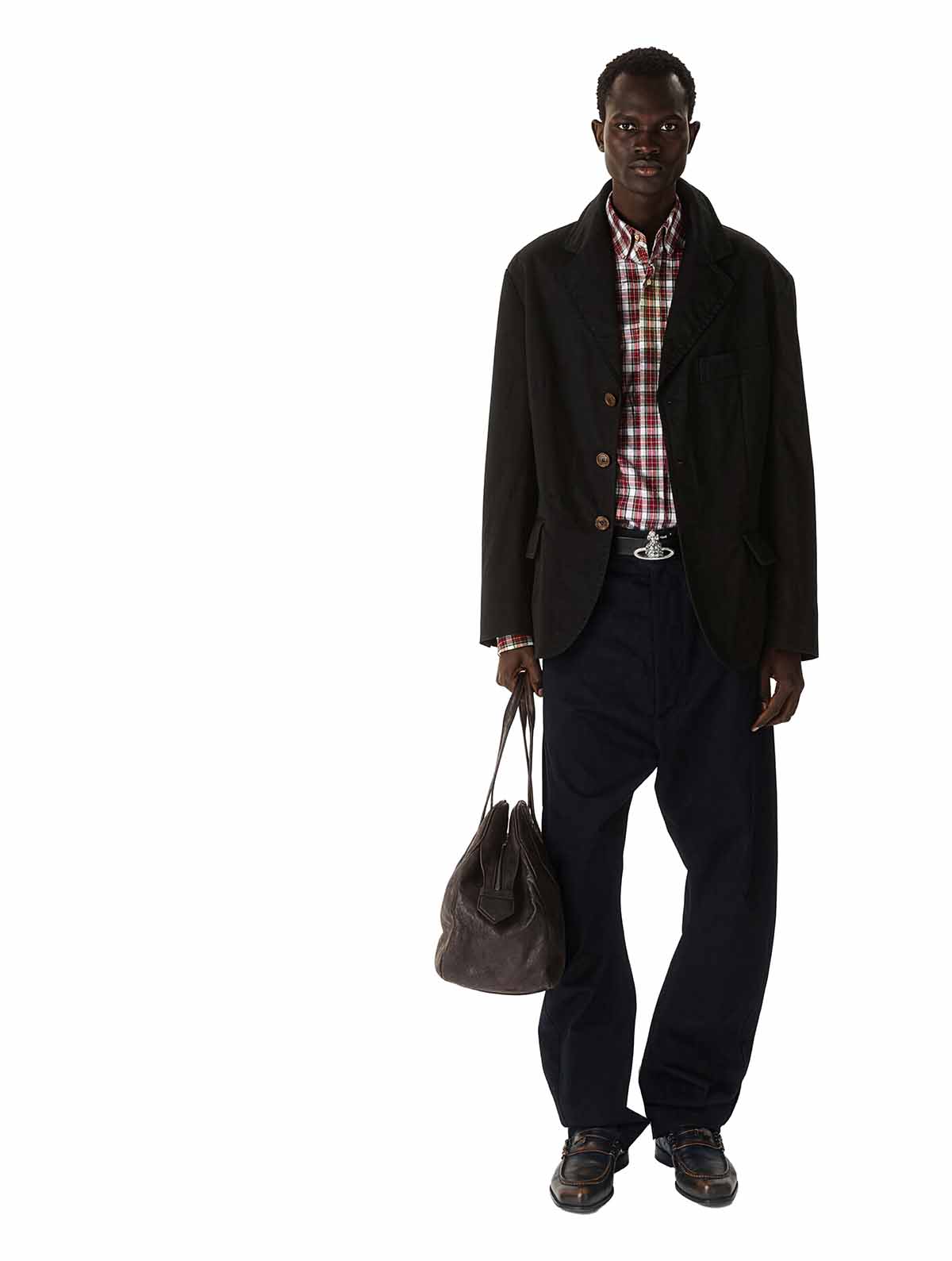
Tap image to shop
"Behind every iconic brand is
an infrastructure that allows
creativity to move."


CREATIVE COUNSEL
Building Your Team for the Big Moment
By Layth Gafoor and Malik Nembhard of Lucentem Sports & Entertainment Law P.C.
Eminem said it best. One shot. One moment.
The point of “Lose Yourself” was never really just about rap. It was about the paralysis that happens when opportunity finally shows up and finds you unprepared. The question was never whether the moment would come. The question was whether you would be ready when it did.
For Black creatives in Canada, that moment is real. Maybe it is a DM from a New York creative agency asking if you are available for a campaign. Maybe it is a brand out of Atlanta that found your work on Instagram and wants to talk numbers. Maybe it is a music sync opportunity, a production deal, or a collaboration with a US platform that has been watching what you build.
The door cracks open. And just like in the song, the question is: will you capture it, or let it slip?
Most of us are built for the creative work. The vision, the execution, the craft. We have been preparing for that our whole lives. What we have not always prepared for is what happens after someone says “yes.”
The W-9 Problem
When the call comes, the first thing a US company may ask you is not “when can you start?” It may be, “can you fill out this W-9?” And that is where things can go sideways fast.
A W-9 is an American form for American people and US-based businesses. It is what the IRS uses to track payments made to US citizens and US entities. If you are a Canadian creative, whether you are a designer, musician, filmmaker, photographer, stylist, or consultant, and you sign a W-9 thinking it is just standard paperwork, you may be telling the American government you are one of theirs.
What you actually need is usually a W-8BEN if you operate as an individual, or a W-8BEN-E if you operate through a company. These forms confirm your foreign status and allow you to claim the benefits of the Canada-US Tax Convention, the treaty that helps protect you from being taxed twice on the same income.
Here is why that matters. Without the right form on file, a US company may be required to withhold 30% of your gross payment and send it to the IRS. On a $50,000 contract, that is $15,000 gone before you see a cent. You can try to recover it later by filing a US tax return, but that can be a slow and expensive process, and many creatives do not know it is even an option.
With a properly completed W-8 form, and because of the longstanding Canada-US tax treaty, the withholding rate on many types of service income earned from Canada can drop to zero. The money comes to you in full. You report it in Canada, pay Canadian tax on it, and keep the process clean.
This is why having an accountant who understands cross-border taxation on your team before the big call comes is not a luxury. It is preparation. Think of them as the person you reach out to the moment a US opportunity hits your inbox, not the person you scramble to find after you have already signed something by mistake.
Your Business Structure
There is a second piece of readiness most creatives overlook, and it has nothing to do with the creative work itself. It has to do with how your business is set up.
Most of us start as sole proprietors. That makes sense. It is simple, low-cost, and gets you moving. But as the work grows, so does the exposure. When a US company wants to put serious money in your hands, when a contract dispute becomes a legal matter, or when you want to hold on to more of what you earn, your structure starts to matter.
"Most of us are built for the creative work. What we have not always prepared for is what happens after someone says yes."
Incorporating, or setting up a corporation, is not as intimidating as it sounds. In Ontario, the government filing fee is $300. Incorporation creates a legal separation between you and your business. If something goes wrong on a contract, the corporation may carry that risk instead of you personally. It can also create tax planning options as your income grows.
It also changes the way you show up. When a US client sends a vendor form, the corporation files a W-8BEN-E, not a W-8BEN. That signals to the American company that they are dealing with an established business entity. In US deal culture, that matters more than most of us realize.
A lawyer helps you get the structure right from the start: the share design, the protection, the contracts, the terms. An accountant keeps it clean and helps make sure you are keeping what you have earned. Together, they are your off-field team. You do not need them every day, but you need them ready.
Your Bank Account
Here is the one that surprises people the most: the bank.
Not a personal account with a business name attached to it. An actual business bank account, set up properly in the name of your business, with a commercial relationship you start building long before you need it.
Why? Because when the big opportunity lands, the one that requires you to front costs, hire people, book equipment, travel, or bridge the gap before a client pays, you may need access to capital. A business line of credit can be the cushion that allows you to say yes to a $200,000 project without having $200,000 sitting in your account.
Banks do not hand that out immediately. They build it over time by watching your account: months of deposits, consistent activity, and a business that looks like a business. When you ask for an operating line, the advisor looks at your history, and your history is either there or it is not.
So, the smart move is to set up the account now. Keep it active. Build the relationship with your banker before you need them. When the moment comes, you will have infrastructure to match the opportunity.
For Black creatives specifically, this matters even more. Programs like the Black Entrepreneurship Loan Fund, administered through the Federation of African Canadian Economics in partnership with BDC, offer loans for Black entrepreneurs. But you need structure to access opportunity. You need an account. You need a corporation. You need the paper trail that signals your business is real and already running.
Being Ready
Being ready does not mean having a full accounting team or a lawyer on retainer. It means doing a few key things before the call comes.
Know what form to send when a US company asks for a W-9. Have a cross-border accountant in your contacts. Get your business structure right, whether that means staying as a sole proprietor for now or incorporating as your income grows. Open a dedicated business bank account and start building that commercial relationship.
Then share what you know. That is what the Black Designers of Canada, BDC, is meant for. When one of us learns how to correctly fill out a W-8, we all get smarter. When one of us navigates incorporation and learns what they wish they had done differently, that knowledge becomes valuable currency for the whole community.
There is one more thing worth raising. If an opportunity ever involves physically working in the United States, such as performing, shooting, producing, installing, or working on-site, there is a separate conversation around immigration and work authorization. The W-8 handles the tax side. The visa handles the border. That is a full piece on its own, and we will get into it. But start thinking about it now. Knowing which category applies to your work, and getting the right advice in advance, is part of the same preparation.
BDC will be hosting complementary legal consultations for members of the community. This is your chance to sit down with a lawyer, ask the questions you have been sitting on, and get real answers about your specific situation. Whether it is understanding what forms you need for a US deal, figuring out whether it is time to incorporate, or making sure your contracts protect you properly, the session is yours. No jargon. No billing clock. Just information you need to move with confidence.
Keep an eye on BDC’s channels for dates and details, and take advantage of it. That is what community looks like in practice.
The opportunity is coming. The talent is already there. The question has always been about readiness

DESIGNER BEAUTY
Caudalie: Clean Beauty with a French Accent

DESIGNER TECH
Highlight must-have tools and gadgets for graphic, fashion, and interior designers, making innovation, efficiency, and creativity effortlessly accessible.
By Clive Deonarine

Oura Ring 5
The Oura Ring 5 is Oura’s newest smart ring, designed to make health tracking feel more seamless and stylish. With a thinner, lighter profile than the Ring 4, it tracks sleep, activity, recovery, heart rate, stress, and other key wellness signals from the finger. Its improved sensors, week-long battery life, and premium titanium finishes position it as both a
wellness tool and everyday accessory for people who want deeper health insights without wearing a smartwatch.
Price $529.99 CAD


Support Black Designers Of Canada by purchasing our collectible second edition hard copy.
Purchase collectible